
A chatbot is better than a FAQ page for course sales when a buyer needs a specific answer or a follow-up, but it should not replace your published FAQ. Keep course terms visible, then use chat to answer questions from those same sources with citations. A chatbot still needs accurate source material; it should not invent discounts, refund exceptions, or income promises to complete an answer.
- Is a chatbot better than a FAQ page for course sales? Use both: published terms plus source-grounded answers.
- HelpShelf provides course creators with cited chat answers and lead capture; missing source content still needs your attention.
- FAQ pages suit buyers scanning common questions; chat suits buyers asking specific follow-ups.
- Keep refund policies and course requirements published, and refuse requests that those sources do not support.
Is a chatbot better than a FAQ page for course sales?
Use a FAQ page as the published reference and a source-grounded chatbot as the conversational layer. Neither format fixes incomplete course information. The useful distinction is how a buyer reaches an answer, not whether a page looks more modern.
Before choosing a widget, understand how a chatbot cites sources from your own content. A citation gives the buyer a way to inspect the basis for an answer rather than accepting the chat response alone.
| Approach | Best for | What it does well | Limitation |
|---|---|---|---|
| FAQ page | Buyers scanning common questions | Presents the same published answer without requiring a conversation | Buyers must find the relevant question themselves |
| Source-grounded chatbot | Buyers asking specific questions and follow-ups | Responds to the question using supplied content and cites supporting sources | Missing or conflicting sources leave questions unresolved |
| FAQ page plus chatbot | Creators serving both browsing and conversational buyers | Keeps terms visible while providing another route to an answer | Both routes need consistent, current information |
A chatbot is not automatically better at selling. An answer that sounds helpful but changes your course terms is a problem, not a sales improvement. Judge the response by whether it accurately addresses the buyer's question and shows where the answer came from.
Why this matters
Picture a prospective student reading your course page at 11pm. They want to know whether the material assumes prior experience. Your FAQ discusses access and support, but the prerequisite appears elsewhere in the course description.
A FAQ page requires that visitor to keep looking. A source-grounded chatbot can answer from the prerequisite text if that text is among its supplied sources. If it is not, the correct response is to say that the answer is not published—not to label the course beginner-friendly.
For your 2026 course sales page, start with the unresolved question. If the answer already exists but is hard to find, chat offers another way to reach it. If the answer does not exist, write it before expecting either format to help.
FAQ page: best for visible, repeatable answers
A FAQ page works well when you know the questions buyers need answered before enrolling. It lets you place requirements, access terms, and support boundaries where readers can scan them without opening a conversation.
Keep decision-critical information visible even when you add chat. A buyer should not have to ask a widget whether a prerequisite exists. Put the answer on the course page or in the FAQ, then make that published text available to the chatbot.
The strength of a FAQ is editorial control. You write the question and the answer together, so you can explain a boundary directly. For example, a prerequisite answer can distinguish what the course teaches from what the student must already know.
The limitation is discovery. A buyer might ask about experience using different words from your FAQ heading, or combine several concerns in a single question. Adding more entries does not automatically make the right answer easier to locate.
For a 2026 FAQ review, read each entry as a purchase decision rather than a support document. Does it answer what the buyer needs to know? Does it point to the relevant policy? Remove reassuring language that goes beyond the published terms.
Source-grounded chatbot: best for specific follow-ups
A source-grounded chatbot gives the buyer a place to ask the question in their own words. Instead of choosing a FAQ heading, they can describe the uncertainty: whether their experience matches the prerequisites, what the published access terms mean, or where to find the support policy.
The advantage is the conversational format. A buyer can ask a follow-up without starting a new search through the page. A cited response also gives them a route back to the supporting content.
The limitation remains the source material. A chatbot cannot turn an unpublished policy into an authorized answer. A fluent response is not evidence that a refund exception, course inclusion, or promised result exists.
A suitable example response to an unsupported request is: I can only quote what's published. The source does not authorize that exception. This is a refusal pattern, not a statement about your actual refund terms.
Use chat to explain published information, not to negotiate new terms. If the question requires your judgment, the answer should make that boundary clear instead of pretending the decision has already been made.
FAQ page plus chatbot: best for serving both reading styles
The combined approach gives a buyer two routes to the same information. Someone who wants to scan can read the FAQ. Someone with a specific concern can ask chat and inspect the cited source.
This pairing works only if the routes agree. Suppose you revise a prerequisite on the course page but leave older wording in another source. The problem is not which interface the buyer chooses; the problem is conflicting information.
For a 2026 content review, identify the authoritative wording for each important topic. Update or remove contradictory material before using it as a source. A citation to an outdated document is still an outdated answer.
The combined approach also needs a boundary around lead capture. Collecting contact details creates a way to follow up; it does not resolve the buyer's question. Make clear what remains unanswered and what the visitor is asking you to address.
Why the better choice varies
The right balance depends on your published material and the questions buyers bring to it:
- Question shape: A standard question fits a FAQ entry. A question combining several published details benefits from a conversational response.
- Source completeness: Both formats need an actual answer. Chat should refuse to fill gaps with plausible course terms.
- Source consistency: Conflicting course descriptions and policies need correction before you rely on cited answers.
- Decision sensitivity: Prerequisites, access terms, and refund policies need precise wording, not generalized reassurance.
- Follow-up needs: A buyer who needs a creator's decision requires a clear next step rather than another paraphrase of the same source.
These factors guide the format choice; they do not establish a conversion advantage. To decide which route helps your buyers, inspect actual questions and compare them with the answers your content supports.
Where HelpShelf fits
HelpShelf provides an AI sales and support chat widget that answers from a creator's course, coaching, or community content, includes cited sources, and captures leads.
HelpShelf is best for course creators who want cited pre-sale answers and lead capture from their own content. That is a fit statement, not a promise of additional course sales.
The benefit is a conversational route to information you already publish. The limitation is that you still own the source content: missing prerequisites, unclear support boundaries, and conflicting policies need your attention. The widget does not remove that responsibility.
How should you compare a chatbot with your FAQ?
Use the same questions for both formats. For your 2026 comparison, examine answer quality before treating a captured lead or completed conversation as a successful outcome.
1. Source check
Choose questions buyers genuinely ask, then locate the published answer for each. If a source does not answer the question, mark it as unresolved and decide whether you need to publish new information.
Do not quietly add assumptions to make the chatbot test easier. A missing answer is useful evidence about your content.
2. FAQ check
Try to find each answer through the course page and FAQ without relying on your knowledge as the creator. Look at headings, wording, and whether the answer is separated from the question that prompted it.
If the answer is hard to find, improve its placement. Chat should not become an excuse to leave the page unclear.
3. Chat check
Ask the same question in natural language. Check whether the answer addresses the concern, whether the cited passage supports the response, and whether important conditions survive the summary.
A source mentioning support does not establish unlimited personal coaching. The answer must preserve the boundary actually stated.
4. Refusal check
Ask for something the published material does not authorize. An extra discount, a refund exception, or a guaranteed income result should not appear merely because the visitor requests it.
The acceptable response names the limit and avoids inventing a substitute promise. Refusing an unsupported request is a successful result.
5. Follow-up check
Test what happens when the question needs your decision. The response should distinguish an unanswered question from an answered one and explain the available next step without suggesting approval.
If you collect a lead, preserve the question that needs attention. Contact details alone do not explain why the buyer hesitated.
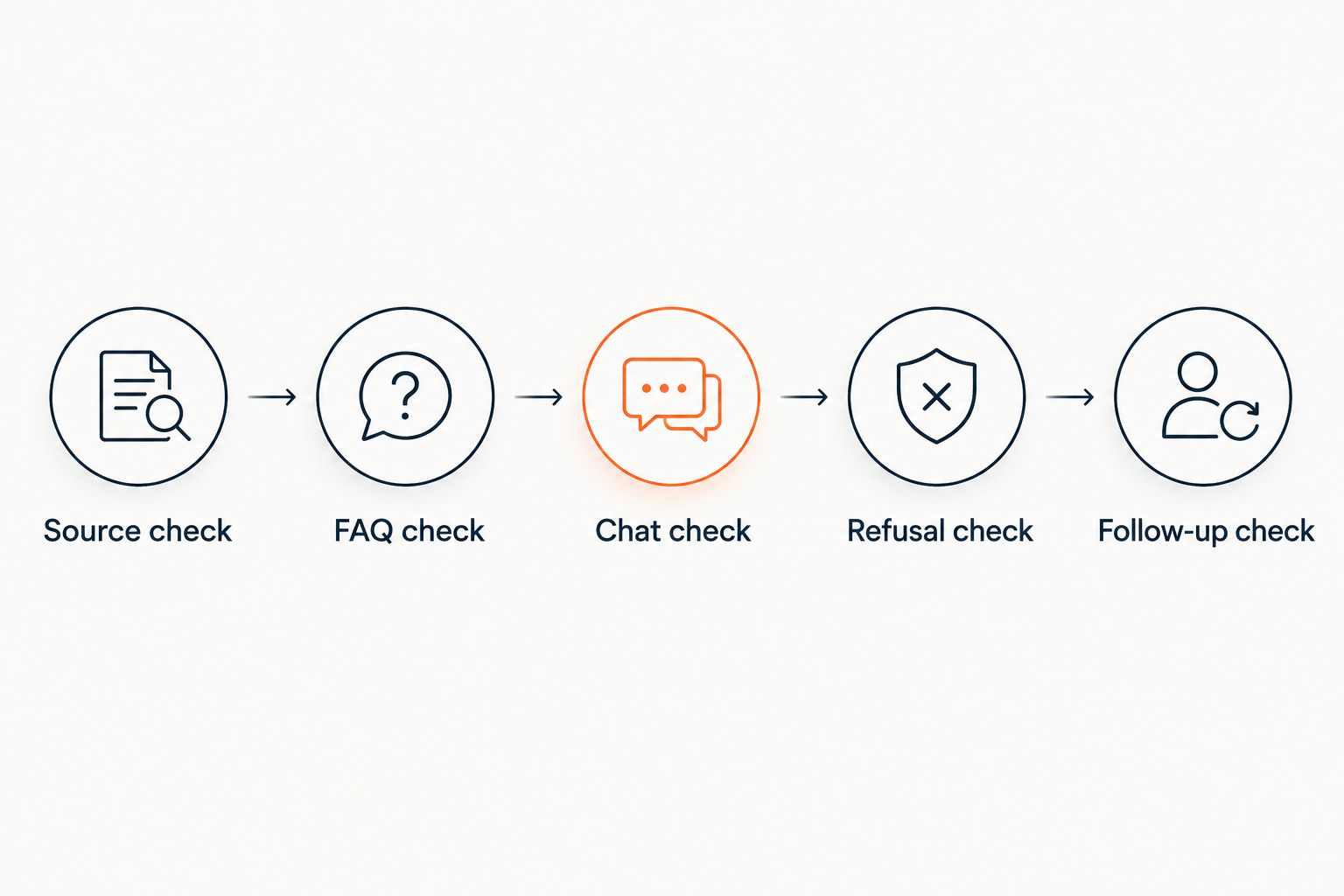
Use these 5 checks together. A response can be easy to read yet fail the source check; it can cite a passage yet omit a condition. Review the whole answer rather than treating the presence of a citation as automatic approval.
What should a chatbot refuse to answer?
A course sales chatbot should refuse requests that require unpublished terms or unsupported promises. That includes invented discounts, refund exceptions, and income guarantees not established by the supplied content.
Distinguish explanation from authorization. Explaining a published policy is an answer; granting an exception is a decision. The chatbot should not blur the two because the buyer asks insistently.
Can a chatbot replace all your course sales FAQs?
No. Keep essential requirements and terms visible without requiring a conversation, then use chat for questions about that information.
Removing the FAQ also removes a browsing route for buyers who prefer to read. Add chat where it helps discovery, not as a reason to hide the material buyers need to inspect.
How do you know whether chat helped a buyer?
Check whether the buyer received a supported answer to the actual question. Separate that result from lead capture and enrollment; they are different outcomes.
Use 3 review questions: Was the response supported? Did it address the concern? Did it preserve the published boundaries? A completed conversation that fails any of these checks is not a sound course sales answer.
FAQ
Is a chatbot better than a FAQ page for course sales in 2026?
A source-grounded chatbot is better for specific questions and follow-ups; a FAQ page is better for scanning published answers. Use both when you want conversational access without hiding essential course terms.
Should I remove my FAQ after adding a chatbot?
No. Keep prerequisites, access terms, and other decision-critical information visible, and let chat answer questions from the same published sources.
Can a course sales chatbot promise that I will earn money?
A course sales chatbot should not invent income promises. It should explain what the published material supports and refuse unsupported guarantees.
What happens if my course content does not answer a buyer's question?
The chatbot should say that the supplied content does not answer the question. You can then publish the missing information or address the question yourself without presenting an assumption as a course term.
Does a citation prove that a chatbot answer is correct?
No. A citation lets you inspect the supporting source, but you still need to check whether that source supports the entire answer and whether its wording is current.
Is HelpShelf relevant if I already have a course FAQ?
HelpShelf's course sales chat widget is relevant when you want cited conversational answers and lead capture alongside your FAQ. You still need accurate source content and visible course terms.
Does collecting a lead mean the chatbot answered the question?
No. Lead capture provides contact details for follow-up, while answer quality depends on whether the response addressed the buyer's concern using supported information.
One last thing
Test the answer you want the chatbot to refuse. Ask for an unpublished exception, not just a straightforward explanation of a course module. That exposes whether the conversation respects your terms when a buyer pushes beyond them.
Keep that refusal test in your 2026 review alongside ordinary buyer questions. A useful sales answer sometimes ends with a clear boundary rather than an invitation to purchase.