
Cohort-based course creators sell seats with an expiration date, and every unanswered question at 11pm is a seat that might close before you wake up. An ai chatbot for cohort-based course creators reads your existing curriculum, application page, and past cohort FAQs, then answers pre-sale questions with cited sources instead of "great question, let me check and get back to you." Self-paced course sellers can let a question sit for two days; cohort creators can't, because the cohort has a fixed start date and a capped seat count.
- An ai chatbot for cohort-based course creators answers pre-sale questions about start dates, prerequisites, and live sessions from your own syllabus, not a script.
- HelpShelf cites the exact page it pulled an answer from, so it never invents a cohort date, discount, or refund exception.
- Generic live chat widgets need someone to manually script every reply; a source-grounded chatbot reads the content you already published.
- Community-native DMs on Skool or Whop answer instantly but with no citation and no guarantee the person online knows the current cohort details.
- 2026 verdict: run a cohort with more than a handful of applicants per window, and an unanswered 11pm question is a lost seat, not a missed email.
Why an AI chatbot matters for cohort-based course creators
Cohort-based courses run on a countdown a self-paced course never has: a start date, a cap on seats, and usually a live component that raises timezone and schedule questions a static FAQ page can't anticipate. A prospect who messages you at 11pm about whether Tuesday sessions overlap with their work schedule isn't waiting until Thursday for a reply — by then the cohort has filled or they've moved on.
The questions cluster predictably across almost every cohort: application requirements, the actual start date, live session times, what happens if someone misses a session, refund terms, and whether the price includes lifetime access to recordings. None of those are hard questions when the answer already lives in your sales page or syllabus. The problem is getting that answer in front of a prospect at 11pm on a Tuesday, not at 9am when you finally check your inbox. If your cohort sits inside a broader academy structure, the mechanics overlap with what's covered in this guide to AI chatbots for online academies.
A chatbot that only answers from what you've actually published also protects you from a specific cohort risk: a bot that guesses at a refund policy or promises a discount that doesn't exist creates a support ticket you didn't have before, right in the middle of an enrollment push in 2026.
Audit the questions your last three cohorts actually got asked
Before building anything, pull the real questions. Most cohort creators are surprised how repetitive they are.
- Check your email and DM history for the two weeks before your last enrollment deadline
- Sort questions into pre-sale (will this work for me), logistics (when, how long, what timezone), and post-purchase (how do I access day one)
- Flag any question you answered differently to two different people — that's a gap in your published content, not a chatbot problem
- Note which questions came in outside business hours, since that's the volume a chatbot actually recovers
Build a source-of-truth doc for the current cohort
A chatbot for cohort-based course creators is only as accurate as the content it reads. Cohorts change cohort to cohort — dates shift, prerequisites get added, a session moves — and stale source content produces confidently wrong answers.
- Keep one current page with start date, application deadline, session schedule, and timezone
- List prerequisites and who the cohort is (and isn't) a fit for, in plain language
- Publish your actual refund terms — no exceptions promised anywhere the chatbot might read
- Update the source page the same day anything changes, before the next applicant asks
Set up cited answers instead of a generic support inbox
This is where an ai chatbot for cohort-based course creators earns its place over a plain contact form. HelpShelf connects to your existing course, community, or coaching content on platforms like Kajabi, Skool, and Whop and answers from what's already published, showing the source it pulled from.
- Point the chatbot at your syllabus, FAQ page, and application page rather than writing new scripts
- Set the tone so it answers pre-sale questions directly instead of deflecting to "contact support"
- Confirm it declines to answer anything not covered — a good chatbot says "I can only quote what's published" instead of guessing at a refund exception
- Test it with the actual questions from your audit, not hypothetical ones
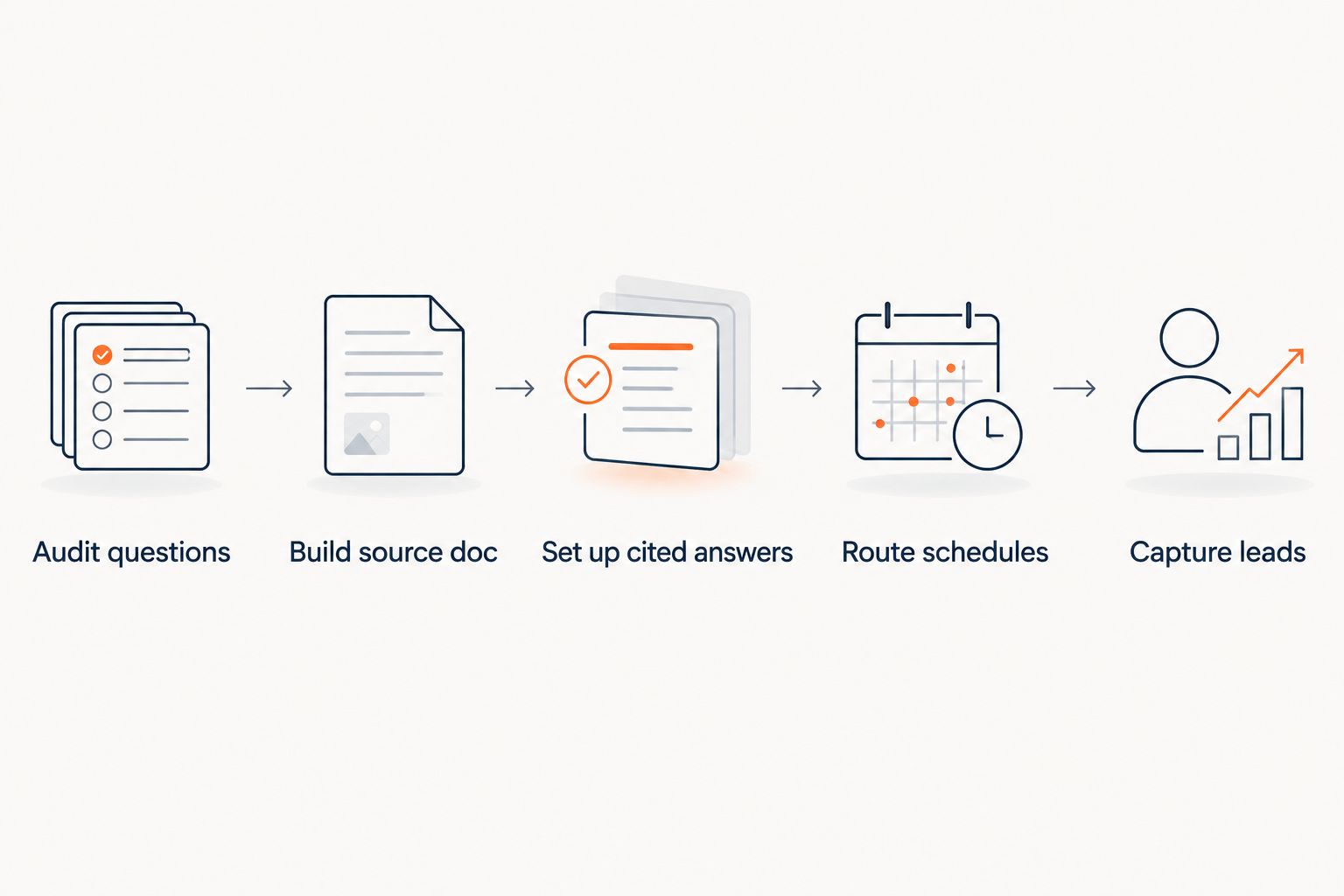
Route timezone and schedule questions correctly
Live sessions are the one thing self-paced courses don't have to answer for, and they generate a disproportionate share of pre-sale questions.
- Publish session times in a fixed reference timezone, not "your local time"
- Let the chatbot answer "will this overlap with X timezone" directly from the published schedule
- Cover what happens to someone who misses a live session — recording access, makeup session, or neither
- Don't let the chatbot infer a timezone conversion it wasn't given; a wrong session time costs you a seat and a support ticket
Capture leads before the waitlist forms
A cohort with a hard cap fills fast once word gets out, and a prospect who asks a question but doesn't convert that session is often gone for good.
- Have the chatbot ask for an email before or after answering a substantive pre-sale question
- Route waitlist requests to wherever you already manage them — don't build a second list
- Flag high-intent questions ("is there still a seat left") for a human follow-up, not just a bot answer
- Check that captured leads land in your existing CRM or email tool, not a spreadsheet nobody checks
Handle refund and guarantee questions without guessing
This is the mistake that costs cohort creators the most in 2026: a chatbot that improvises on money questions.
- Publish your refund window and any conditions in plain text the chatbot can cite
- Never let a chatbot promise an exception "just this once" — it has no authority to make that call and neither should it pretend to
- If the answer isn't published, the correct chatbot response is a referral to a human, not a guess
- Review chatbot transcripts weekly during an enrollment push to catch anything it answered incorrectly
Measure what the chatbot does during enrollment week
Enrollment week is where the chatbot either earns its place or proves it isn't set up right.
- Track how many pre-sale conversations happened outside your normal reply hours
- Check how many of those conversations captured an email or moved to a waitlist
- Look at what the chatbot couldn't answer — that's your next source doc update
- Compare seats filled this cohort against the last one you ran without it
Comparing your options
| Option | Best for | Setup effort | Key limitation |
|---|---|---|---|
| Manual FAQ page + email | Solo creators running their first cohort | Low — a static page written once | No live citations; every question still lands in your inbox |
| Generic live chat widget | Teams with an existing support stack | Moderate — needs manual flow-building | Answers aren't grounded in your curriculum unless someone scripts every reply |
| Community-native DMs (Skool, Whop) | Creators who live inside one platform already | None — it's already there | No citation, and answer quality depends on who's online |
| HelpShelf | Cohort-based creators on Kajabi, Skool, or Whop who need pre-sale answers pulled from published content | Low — connects to content you've already written | Only answers what's published; won't invent a discount, exception, or income promise |
Manual FAQ pages: Skip once your applicant count outgrows what you can personally answer by email. Generic live chat widgets: Hold if you already pay for one and aren't using it for pre-sale questions. Community DMs: fine for casual chatter, Skip for anything that needs a cited, repeatable answer. HelpShelf: Buy if unanswered pre-sale questions are costing you filled seats during the enrollment window.
“I can only quote what's published.”
Common mistakes cohort-based course creators make
- Treating enrollment week like a normal week. Question volume spikes right before the deadline, and a chatbot with stale source content answers confidently wrong at the exact moment it matters most.
- Not updating the source doc between cohorts. Dates, prerequisites, and pricing change; a chatbot reading last cohort's page will quote the wrong start date to this cohort's applicants.
- No answer for missed live sessions. This is one of the most common pre-sale questions for a cohort format and the one most FAQ pages skip.
- Letting the bot improvise on refunds. A chatbot that promises an exception it has no authority to grant creates a dispute, not a sale.
- No lead capture on the chat. A prospect who asks a question and doesn't convert immediately needs to land on a waitlist, not disappear.
See HelpShelf on your course site
Connect your Kajabi, Skool, or Whop content and cite answers automatically.
FAQ
What's the best AI chatbot for cohort-based course creators in 2026?
HelpShelf is built for creators on Kajabi, Skool, and Whop who need pre-sale and support answers grounded in their own published content, with a citation on every answer. It's the strongest fit if your questions are specific to your syllabus and schedule rather than generic FAQ topics.
How is a chatbot for cohort-based courses different from one for self-paced courses?
Cohort creators face a hard deadline and a capped seat count, so timezone, schedule, and application questions matter far more than they do for a self-paced course a prospect can buy any day. The chatbot needs current cohort dates, not evergreen content.
Can an AI chatbot answer questions about live session times and timezones?
Yes, if the schedule is published in a fixed reference timezone the chatbot can cite. It should not guess a timezone conversion it wasn't given a source for.
Should the chatbot answer questions during the cohort itself, or only pre-sale?
Most cohort creators start with pre-sale questions since that's where seats are won or lost, then extend the same source-grounded answers to enrolled students for logistics questions once the cohort starts.
How much does an AI chatbot for course creators cost in 2026?
Pricing varies by platform and the volume of conversations, so check current plans directly on the provider's site rather than relying on a fixed number.
Does an AI chatbot for cohort creators integrate with Kajabi, Skool, or Whop?
HelpShelf is built to connect to course, coaching, and community content on those platforms specifically, rather than requiring a generic setup meant for a different kind of business.
What happens when the chatbot doesn't know an answer?
A well-configured chatbot says it can only answer from what's published and refers the question to a human, instead of guessing at a refund exception, discount, or income claim.
Can the chatbot capture leads for a cohort waitlist?
Yes, most setups ask for an email before or after answering a substantive pre-sale question and route it to wherever the creator already manages the waitlist.
One last thing
The cohort creators who get the most out of an ai chatbot for cohort-based course creators aren't the ones with the most traffic — they're the ones who update the source doc the same day something changes. A chatbot reading last cohort's start date will confidently quote it to this cohort's applicants, and that mistake costs more trust than a slow email reply ever did in 2026.