
Unanswered DMs do not translate into a fixed revenue loss for Whop communities: estimate the exposure from qualified buying conversations, purchase outcomes, and the revenue those purchases would contribute. Keep missed sales separate from support workload and cancellations, and treat an unanswered message as an unresolved opportunity—not proof of a lost sale.
- How much do Whop communities lose to unanswered DMs? Measure qualified conversations and purchase outcomes, not raw message counts.
- Whop creators should separate pre-sale questions, member support, and account-specific requests before estimating losses.
- HelpShelf suits creators seeking source-cited answers and lead capture; it does not establish how many sales were lost.
- An answered conversation is not a recovered sale unless the purchase outcome supports that conclusion.
Why this matters: Someone asks whether your community covers the skill they need. You see the message after they have stopped responding. That conversation deserves follow-up, but assigning the full membership value to it would turn an unknown outcome into a financial claim.
Start by separating buying questions from everything else. The guide to pre-sale objections and sales addresses that distinction: a purchase blocker needs a supported answer, not a more persuasive guess.
How much do Whop communities lose to unanswered DMs?
The useful estimate is qualified unanswered opportunities multiplied by an observed purchase rate and a consistently defined revenue value. That produces a scenario estimate, not an audited loss figure. A stronger assessment compares similar buying conversations with different response outcomes and follows what happened afterward.
Use your own 2026 records rather than assigning a general conversion rate to every community. Someone asking about course prerequisites is not equivalent to someone sending a collaboration pitch, and neither message is equivalent to an existing member asking where to find a lesson.
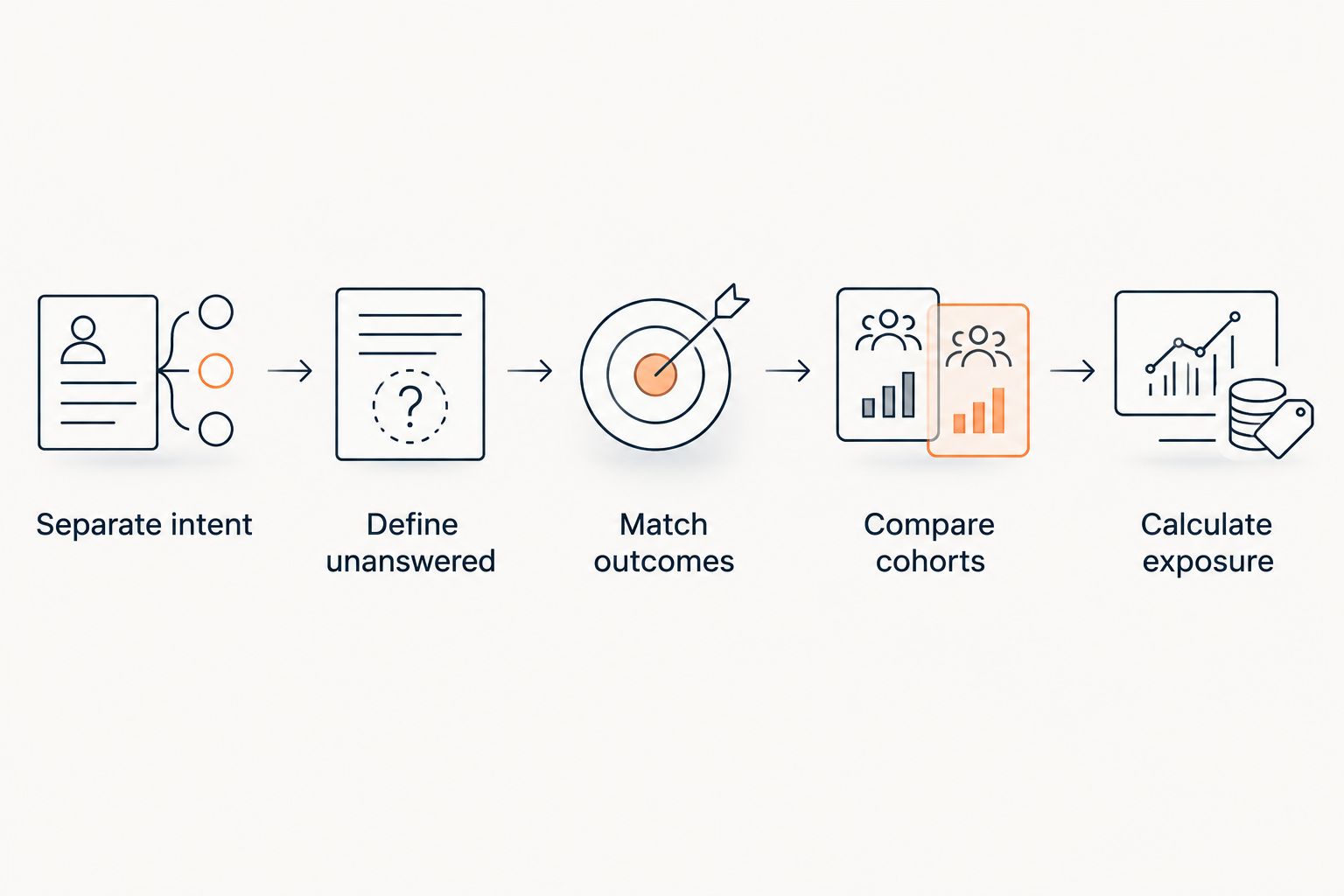
Follow this process before attaching a revenue figure to your inbox.
Separate intent
Classify each conversation by its purpose: pre-sale question, existing-member support, account-specific request, or unrelated message. Count the conversation once, even when the sender follows up repeatedly.
For pre-sale conversations, record the actual question. A request about curriculum, access, or suitability gives you something concrete to resolve; a greeting alone does not establish buying intent.
Define unanswered
Choose a response window that matches your published operating expectations, then apply it consistently. Distinguish no response from a late response and from a response that never answered the question.
An acknowledgment is not necessarily a resolution. If someone asks whether a prerequisite is required and receives only a welcome message, the buying question remains open.
Match outcomes
Record whether the person later purchased, remained in conversation, explicitly declined, or had no observable outcome. Use information you are permitted to connect, and leave unmatched records unresolved.
Do not classify silence as a confirmed rejection. A person who buys through another route still purchased, even if the original DM thread ends without a reply.
Compare cohorts
Compare answered and unanswered buying conversations with similar intent, offer, and acquisition context. Keep existing members out of the new-buyer comparison.
For a 2026 baseline, use a consistent reporting period and allow comparable time for purchases to appear. Comparing mature conversations with recent messages creates a timing difference, not evidence of lost demand.
Calculate exposure
Use the purchase-rate difference between comparable groups to estimate the additional purchases associated with answered conversations. Apply a consistent revenue definition, then show unresolved attribution separately.
That association does not prove the response caused the purchase. Buyers with stronger intent can also ask clearer questions or remain easier to reach; your report should preserve that limitation.
Keep these measures separate
Your inbox report should distinguish message handling from commercial outcomes. Combining them makes a busy inbox look like a larger revenue problem than the evidence supports.
| Measure | What it tells you | What it does not establish |
|---|---|---|
| Unanswered buying conversations | Questions left unresolved before purchase | That every sender would have bought |
| Answered-conversation purchase rate | Purchases observed after answered questions | That the answer caused every purchase |
| Unanswered-conversation purchase rate | Purchases observed without a recorded answer | That unanswered messages never matter |
| Unresolved member requests | Existing members still seeking help | That those members will cancel |
| Handling time | Work spent answering and following up | Revenue recovered from that work |
The distinction matters when you evaluate a change. More answered messages is a service result; more attributable purchases is a commercial result. Report each on its own terms.
Why unanswered-DM exposure varies
The same message count can describe very different situations. These factors determine how you should interpret your records—not a universal loss multiplier.
- Buyer intent. A specific question about joining belongs in a different group from an unsolicited pitch or a casual reaction.
- Question type. Published curriculum information needs a different response from a request for an unpublished exception.
- Response completeness. A quick reply that leaves the question open is different from a supported answer that resolves it.
- Purchase visibility. A purchase through another route changes the outcome even when the original conversation appears abandoned.
- Membership status. A prospect's question concerns acquisition; an existing member's request concerns service and potentially retention.
- Revenue definition. Collected revenue, contribution after variable costs, and projected future revenue answer different financial questions.
Keep these definitions stable throughout your 2026 reporting. If the classifications change halfway through, label the change rather than presenting the periods as directly comparable.
Do not add an assumed lifetime value to every unresolved conversation. Future renewals are not collected revenue, and an unanswered question does not establish how long someone would have stayed.
What should answer the questions you keep missing?
Use published answers for repeat questions and human judgment for exceptions. The choice depends on what the visitor needs resolved, not on whether a tool can produce a fluent reply.
HelpShelf is best for creators who need a chat widget with source-cited answers and lead capture. Its stated role is to answer pre-sale and support questions using your own course, coaching, or community content; that is not a claim that it reads every Whop DM or completes account actions.
| Option | Best for | Strength | Limit |
|---|---|---|---|
| Published FAQ | Stable, repeated questions | Gives buyers a consistent reference | Readers must locate and interpret the relevant answer |
| Human reply | Exceptions and account-specific decisions | Lets you investigate context and make authorized decisions | Requires someone to review and respond |
| HelpShelf chat widget | Source-grounded questions and lead capture | Answers from creator content with cited sources | Needs suitable source content; it does not establish recovered revenue |
Do not treat these options as interchangeable. A published answer can explain a policy; only an authorized process should decide an exception. A chat response can help a visitor find relevant content without becoming an account-management system.
Show what the source supports
Suppose a prospect asks whether your community teaches a particular workflow. The answer should identify the relevant published material and explain what that material actually covers. If the source does not establish coverage, the answer should say so rather than filling the gap.
For an unsupported discount request, use a refusal pattern such as: I can only quote what's published. That is sample response wording, not a customer testimonial or a claim about a particular community policy.
Apply the same boundary to refund exceptions and income promises. No invented discounts, no refund exceptions presented as approved, and no income promises inferred from a lesson or sales page.
Do not confuse an answer with an integration
A widget on a page and a responder inside a private messaging channel are different implementations. Establish where the conversation occurs, what information the responder can access, and how a question reaches a person when necessary.
For your 2026 setup, document that boundary before measuring results. A widget cannot receive credit for resolving DMs it never received, and a captured lead is not automatically a completed purchase.
How do I measure whether better replies recover sales?
Measure purchase outcomes alongside response outcomes. Keep the original question category, response status, purchase status, and follow-up result connected wherever permission and your records allow.
Before changing your process, define what counts as success. A resolved curriculum question, a captured contact, and a purchase are separate events. Recording each event prevents a helpful interaction from being presented as a sale without evidence.
Use a consistent comparison and note changes to the offer or acquisition source. If several things change together, report the overall result without assigning the entire difference to message handling.
Recovering the conversation is observable; recovering the sale requires purchase evidence. That distinction keeps your report useful when the result is mixed—for example, more resolved questions without a corresponding purchase increase.
Should I count unanswered member DMs as lost revenue?
Unanswered member DMs belong in a support report first, not automatically in a lost-sales calculation. Track the unresolved issue and the member's subsequent outcome separately.
A member asking where to find a lesson needs a different response from someone disputing a charge. Both deserve attention, but the required authority and source material differ.
If a member cancels, preserve their stated reason when they provide one. Do not rewrite every cancellation following an unanswered message as a cancellation caused by that message.
What should I fix before adding another tool?
Fix missing or conflicting source material before expanding automated answers. If your published content does not explain prerequisites, access, or the scope of support, a source-grounded responder has no sound basis for supplying those details.
Create a repeat-question log and connect each question to its approved source. When there is no source, decide whether to publish an answer or keep the question for human review.
Then test the difficult requests, not only the easy ones. Ask about an unpublished discount, an exception to a policy, and a result the course does not promise. The correct response preserves the boundary instead of improvising a reason to buy.
FAQ
How much do Whop communities lose to unanswered DMs in 2026?
Whop communities do not have a fixed loss amount attributable to unanswered DMs. Estimate exposure from your qualified conversations, observed purchase outcomes, and a consistent revenue definition rather than assigning a value to every message.
Does every unanswered buyer message count as a lost sale?
No, an unanswered buyer message is an unresolved opportunity, not a confirmed lost sale. The sender might purchase through another route, remain undecided, or never have intended to buy.
What should I track before calculating missed revenue?
Track conversation intent, response status, purchase outcome, and whether you can reliably connect the conversation to the purchase. Keep existing-member support separate from new-buyer questions.
Is a chatbot better than answering Whop DMs myself?
A source-grounded chatbot fits repeat questions covered by published content; human replies fit exceptions and account-specific decisions. Confirm the actual messaging channel and integration before assuming a widget can answer private DMs.
Can HelpShelf answer questions from my community content?
HelpShelf answers pre-sale and support questions using a creator's own course, coaching, or community content, with cited sources, and captures leads. That describes its chat-widget role, not proof of native Whop DM access or recovered sales.
Can I count captured leads as recovered revenue?
No, captured leads are contacts, not revenue. Connect leads to actual purchase outcomes before reporting sales, and keep attribution limits visible.
Should automated replies offer discounts to save a sale?
Automated replies should not invent discounts or promise unpublished exceptions. Use the published offer as the boundary and send requests requiring authorization to a person.
One last thing
Read the questions that received a reply but never received an answer. They are easy to miss when your report tracks only whether someone responded.
For your next 2026 review, inspect the substance of the response: did it resolve the prerequisite question, cite the relevant material, or explain why a person needed to decide? A fast acknowledgment does not close a buying question.